


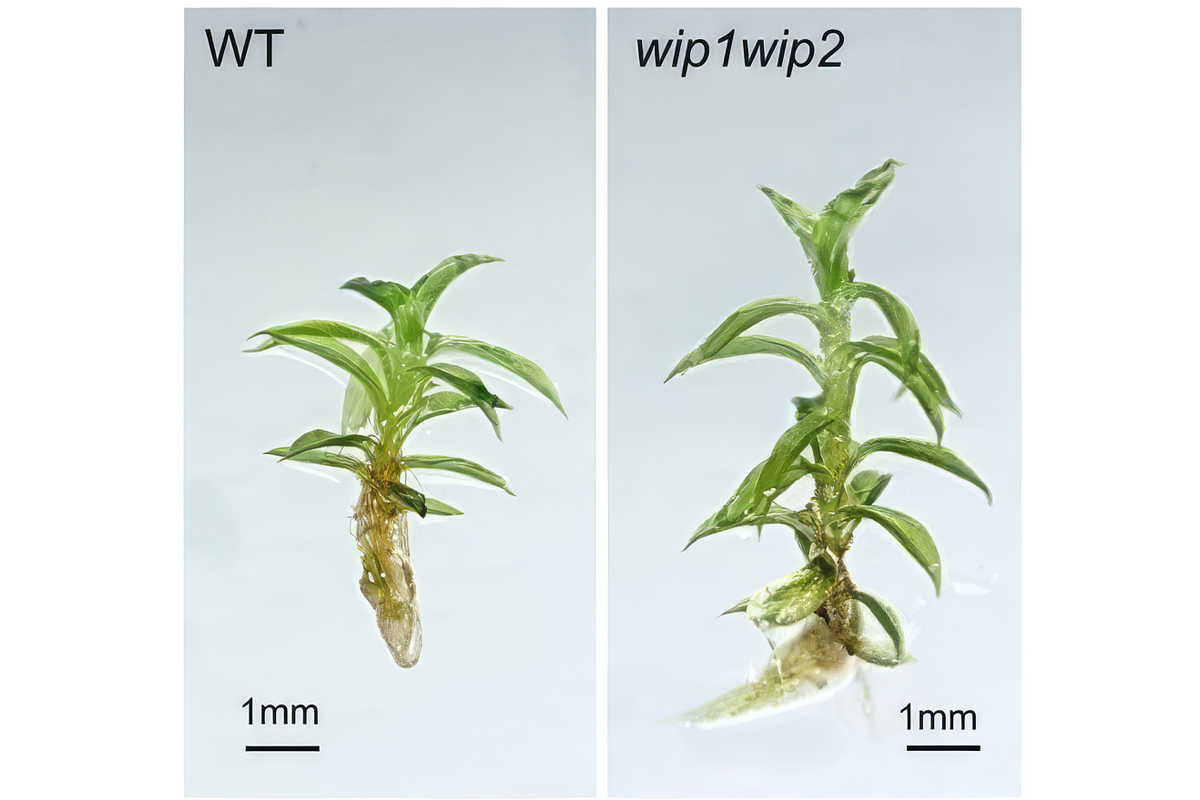
In a study published in PNAS, scientists from the FLOCAD team, in collaboration with the DRAGON team (IJPB), revealed how an ancient family of transcription factors, the WIP proteins, controls key stages of the development of the moss Physcomitrium patens, a model organism used for understanding the evolution of land plants.
Researchers have shown that these proteins play a role during the two main phases of the moss life cycle by regulating the production of auxin, a hormone essential for plant development. In particular, they promote the growth of vegetative tissues while limiting the formation of multiple sporophytes on a single plant — a rare phenomenon known as polysetia.
By comparing these mechanisms with those observed in Arabidopsis thaliana, the authors show that the molecular function of WIP proteins has been largely conserved since the earliest land plants, while having been adapted over the course of evolution to generate new structures in flowering plants. These findings shed new light on the genetic mechanisms that have driven the diversification of land plants over more than 450 million years of evolution.
Leave a Reply